


Any healthy man can develop prostatitis;no one is immune to it.Even astronauts and athletes with an ideal lifestyle are in the “risk zone.”Knowing the symptoms will help you detect prostatitis in time and start treatment.
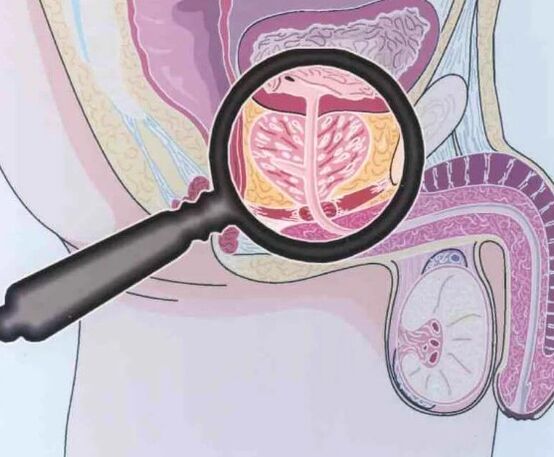
Urinary disorders
The urethra, urethra, passes through the prostate.One of its functions is to control the flow of urine, opening and closing the outlet of the bladder.Therefore, when the prostate is irritated or inflamed, problems with urination often begin.
Increase or decrease in impulse
A symptom of prostatitis is precisely the increased frequency of urges with a decrease in the amount of urine in one serving.Simply an increase in the frequency of cravings with the same portion and volume may be the norm (I just started drinking more fluid) or a sign of a disease such as diabetes: diabetes mellitus or sugar-free diabetes.That is, the total amount of urine per day increases sharply, and therefore a person runs to the toilet more often.Normally this happens, for example, when eating watermelons.Portions of urine are large or enormous.
But when the same amount of urine comes out in one day, but spread over 10 to 30 trips to the bathroom, the size of each portion, of course, becomes several times smaller.In women, this is observed with cystitis, in men - with prostatitis or urethritis, with any irritation of the urinary tract, including inflammation.This symptom may be fairly constant or may fluctuate.If the irritant temporarily weakens the effect, for example when the inflammation subsides.In the case of chronic prostatitis, this does not indicate recovery, but rather an improvement in the condition.This is important in a diagnostic sense.
Weakening of the urine stream.
A weak stream of urine is an important characteristic symptom of a prostate problem.It is usually caused by two main diseases.Adenoma (hyperplasia) of the prostate and prostatitis.It is easy to distinguish them.Adenoma, as a rule, appears in the elderly, and prostatitis - most often in active young men.In any case, this is a symptom that requires an examination of the prostate and not other organs.Exceptions are rare (stones, urethral stricture).
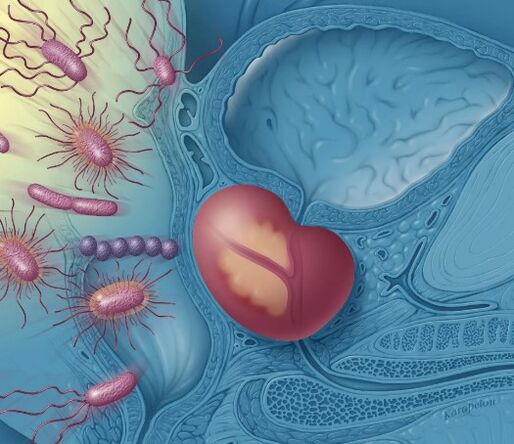
The dependence of the strength of the urine stream on the effect on the gland is specific.By ejaculation, sexual relations or lack thereof.From walking or sitting for a long time.For violating the diet or following it.
Unpleasant sensations
It is very characteristic not only of an increased frequency of urges, but also of unpleasant sensations when urinating.When eating watermelon, for example, you may run to the bathroom every 10-15 minutes, but the feeling is quite pleasant and satisfying.But prostatitis will cause a very unpleasant "imperative" need to go to the bathroom.This brings relief, but for a fairly short time.At night, the urge appears more frequently and is usually more unpleasant.This can interfere with sleep and is usually one of the main complaints.
Urine Serving Sizes
The size of urine portions decreases.This is due to both the irritating effect of inflammation of the prostate and the increased sensitivity of the urinary tract in case of inflammation.Hypersensitivity: it seems that a lot of urine has already accumulated in the bladder, "half a bucket", but in reality there is literally between 30 and 100 ml.
Serving sizes may vary.With more fluid, urinary tract irritation decreases as the urine becomes more dilute.It turns out to be a paradox: a person drinks more liquid, but goes to the toilet less often due to increased portions.
Sharp and urgent impulses
Imperative impulses (acute): more common during exacerbation or with age.They can force a man to refuse a trip or to go his own way “from bathroom to bathroom.”In advanced cases, this leads the man to the need to wear a diaper.On the one hand, urine flows weaker, and on the other, when you feel like it, you have to go to the bathroom.At any cost.
It is almost impossible to “withstand” such an impulse.
urine drip
There is always some urine left after urinating.“No matter how much you shake your penis, the last one will be in your panties” - folk wisdom.However, a little is 1-2-3 drops of urine, no more.Any visible excess of this norm is quite typical for a problem with the urinary tract in a man, but is not always characteristic of prostatitis.
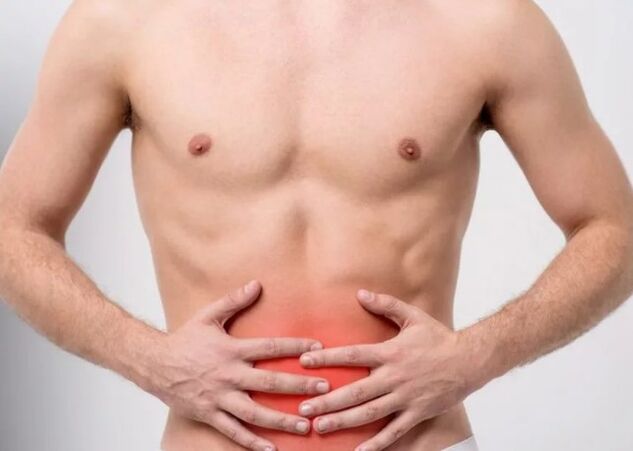
This also includes a completely different symptom - discharge from the urethra.Sometimes they are difficult to distinguish and additional analysis is required.More often, the discharge does not depend on urination, it is thicker than urine, it can be clear, colored, transparent and cloudy... They require a mandatory analysis to identify the cause.It can be a sign of either prostatitis, urethritis or a venereal disease.
pain
Just as the throat hurts with a sore throat, with prostatitis the lower abdomen, perineum, groin, lower back or sacrum also hurt.
Where and how exactly does it hurt?
The pain can also “radiate” to the scrotum, legs, sometimes to the abdomen, up to the level of the navel and even higher.What is important for us is the nature of these pains, their connection with other symptoms and with external causes.
When and why do they appear?
A connection with lifestyle, sedentary work, ejaculation or abstinence makes it possible to practically exclude prostatitis or suspect it with a high probability.Therefore, constant pain that does not depend on these causes may more often be a manifestation of a “neurological” cause, such as CPPS, chronic pelvic pain syndrome.But the pain that appears after ejaculation lasts for several hours or days.or, on the contrary, it disappears after ejaculation for hours and days;It is most likely associated with prostatitis.
Duration
Any.The duration may depend on the severity of the exacerbation and other concomitant diseases.For example, depression will cause constant excruciating pain even with mild prostatitis.A painless form of prostatitis can mask the disease, possibly for many years.
That is, you cannot judge the disease and its severity solely by this symptom.
What makes it better or worse?
This is the main thing that worries the doctor.
The location, nature or duration of pain can be very different for the same disease.But the dependence of the condition on ejaculation, on sedentary work or walking, on overexcitement, on cold or spicy food, helps us quite accurately to determine both the diagnosis itself and the direction of treatment and preventive measures that will allow us to practically recover from chronic prostatitis.
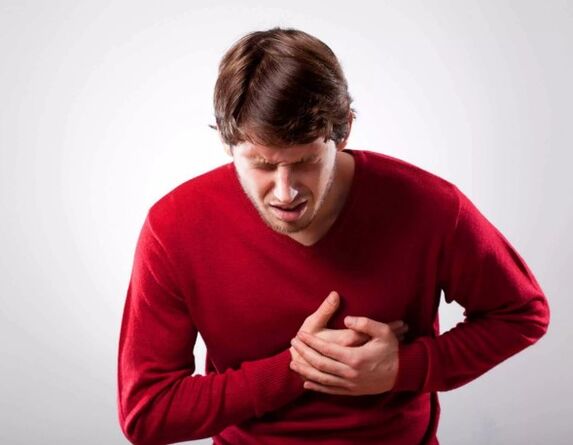
Pain in the heart, back and other organs.
The prostate is a small organ in the pelvis.But its inflammation can affect the entire body.
The first form of influence is intoxication.As with any serious inflammation, such as the flu, most or all of your body may hurt.In the same way, the body can hurt with prostatitis, with its exacerbation.
The second mechanism of pain in distant areas (head, heart, hypochondrium, legs) is neurological.Along the nerves and spine, pain can "radiate" to quite distant areas of the body and even form "secondary" foci of inflammation.For example, in the lumbosacral region.And from there, the pain can “radiate,” radiating to the thoracic and cervical spine, the legs, and almost anywhere.
erection problems
“Officially” an erection should not be affected by inflammation of the prostate.It has other development mechanisms that are not directly related to this “second heart” of man.However, in practice, the erection is affected.At least during an exacerbation.There may be several mechanisms, from the direct effect of inflammation of a nearby organ on the "turning on" of the penis, to an indirect regulatory mechanism, similar to the weakening and slowing down of the erection during prolonged abstinence in adult men (not in adolescents, of course).
Fortunately, this erectile dysfunction is treated very well and reliably.Unless a psychological factor is added.A man with mild prostatitis experiences a slight decrease in erectile function.He begins to worry, to listen to the penis and the neurosis completely destroys his erection from the root.This is the third, most serious mechanism of the influence of prostatitis on erection.
Ejaculation disorders
Ejaculation (ejaculation) is the release of sperm, ejaculate from the penis at the end of sexual intercourse.Performed by the pelvic floor muscles and the prostate.More often, the symptom is a weakening of this release, a decrease in "firing range" and a reduction in sexual intercourse.Sometimes, or temporarily, there may be a prolongation of sexual relations, the man cannot "come" in any way.
Sperm ejection force
When a muscle weakens, its work and action become weaker.The composition of the ejaculate and sperm changes, and the force of ejection also changes.
This is important for three reasons.The first is one of the most accurate signs of damage to the prostate.Almost all other manifestations and symptoms can occur in other diseases.But the weakening of secretion is pathognomonic, specific for prostatitis.
Second reason.Decreased output is a factor that worsens the condition of the prostate after sex, causing POIS (post-orgasm discomfort syndrome).
During treatment, men with POIS report worsening of their condition due to weak and ineffective sperm production.And vice versa: it is increasingly said that high-quality ejaculation does not cause POIS symptoms.Not 100%, but it is very likely.Thirdly, this is probably the main factor that prevents a man with prostatitis from being cured without medical procedures.As soon as the force of sperm release is normalized, the main mechanism for maintaining male health is activated - "self-cleansing" of the prostate gland.
Blurred sensations
Instead of a vivid orgasm, the man feels something like "peeing in boiling water" or "feeling almost nothing."
The intensity of the sensations can vary and also serves as a fairly accurate sign of prostate problems or that improvement is beginning.
Color, quantity and consistency of the ejaculate.
One of the important objective parameters related to the prostate and prostatitis.Often, sperm analysis is performed only to determine fertility and chances of conception.However, semen analysis provides a lot of information about the state of the prostate.So, the color of sperm and ejaculate is normally milky white, cloudy.The consistency is medium-thick, there should be "stickiness", the ability to stretch a drop of sperm into a thread.The smell is specific, without any admixture of the smell of rot, pus, etc.
Any change in these parameters requires urgent examination if there is no diagnosis and treatment yet, for example, when a diagnosis of prostatitis is already available.
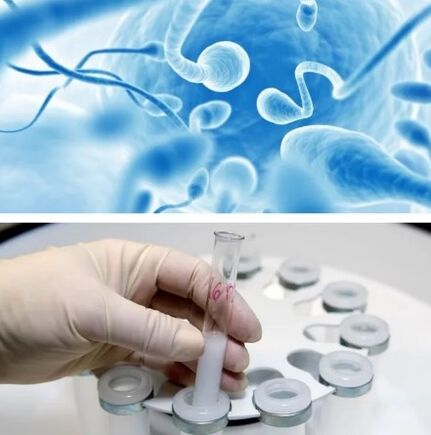
The color (bright white, yellowish and greenish) indicates the presence of an impurity in the sperm, often of an inflammatory and purulent nature.
Transparency indicates decreased prostate function.And there will almost certainly be few “lecithin grains” on microscopic analysis, indicating a decline in the function of this particular organ, although not necessarily due to inflammation.
The amount may be different, it may also fluctuate normally, depending on the rhythm of sexual life.A stable decrease or increase in the number of sperm causes alarm.Perhaps this is a manifestation of "blockage" on the part of the prostate tubules, or simply a decrease in the production of ejaculate.
Not 100%, but it is a fairly characteristic symptom of chronic prostatitis.
Hemospermia
Let us separately consider hemospermia, an admixture of blood in sperm.It can be noticed simply with the naked eye, more often in case of damage to blood vessels, in case of calculitis, in case of cancer and, finally, in case of trauma.The blood can be bright scarlet or old, dark veiny.In any case, this requires urgent analysis of the ejaculate and other examinations.
There is also a mixing of a small amount of blood in the ejaculate: microhemospermia.It often occurs during exacerbation of prostatitis, along with an increase in the number of leukocytes.Sometimes this option can be treated perfectly by fortifying the body;Many urologists, just in case, administer a complex vitamin preparation in a good treatment, often together with zinc, selenium, etc.
This is analogous to bleeding gums.Loose and swollen gums bleed very frequently.And once the inflammation is removed and the gums are strengthened, the blood mixture, of course, disappears.There is no need to fear this symptom if the reason for the appearance of blood in semen is known.
Decreased libido
A very important symptom.Officially, it should not appear with prostatitis either.In practice, two mechanisms are usually involved.
The first is intoxication.With any inflammation, from flu to sore throat, libido and sexual desire can decrease.The body sets its sights on other tasks.
Secondly, perhaps libido is influenced by something similar to the Tarkhanov and Belov phenomena.The symptom is not specific, it can also occur, for example, with a depressive background, which can appear with any chronic disease and even without it.But in combination with other manifestations, we consider this decrease to be important and significant.Even to influence the prospects for recovery.If this problem is not solved and the man is left with reduced libido, it is difficult to talk about curing prostatitis.A decrease will lead to an irregular sex life, stagnation of the pelvis and an increased risk of exacerbations.
Other indirect signs
Weakness, lethargy, sweating.
Most often, these are simply manifestations of intoxication.As with chronic sore throat, bronchitis, etc.Usually these symptoms do not bother you, but even with a slight exacerbation, a deterioration in the general condition appears;There is a fairly clear proportionality between the strength of the inflammation and the degree of sweating, weakness and apathy.As the condition improves, these symptoms disappear.The problem is not at all specific to prostatitis.But it helps to evaluate the strength of the exacerbation, for example.
Headaches and dizziness.
Dizziness and migraines may appear immediately after the act or after a day or two.They are “vegetative” reactions that usually accompany the exacerbation of prostatitis, more often in people with a tendency to vascular reactions.A nonspecific symptom, of course.Perhaps for dozens, if not hundreds, of other diseases.But we will surely take it into account.And of course, we can eliminate it during the course of treatment.